
SKIN CANCER
Skin Cancer
Skin cancer is one of the most common forms of cancer and is strongly associated with exposure to ultraviolet (UV) radiation from sunlight and sunbeds. Early recognition, diagnosis and treatment of skin cancer can significantly improve outcomes.
The main types of skin cancer include basal cell carcinoma (BCC), squamous cell carcinoma (SCC) and melanoma, as well as a number of less common skin cancers.
Signs and Symptoms of Skin Cancer
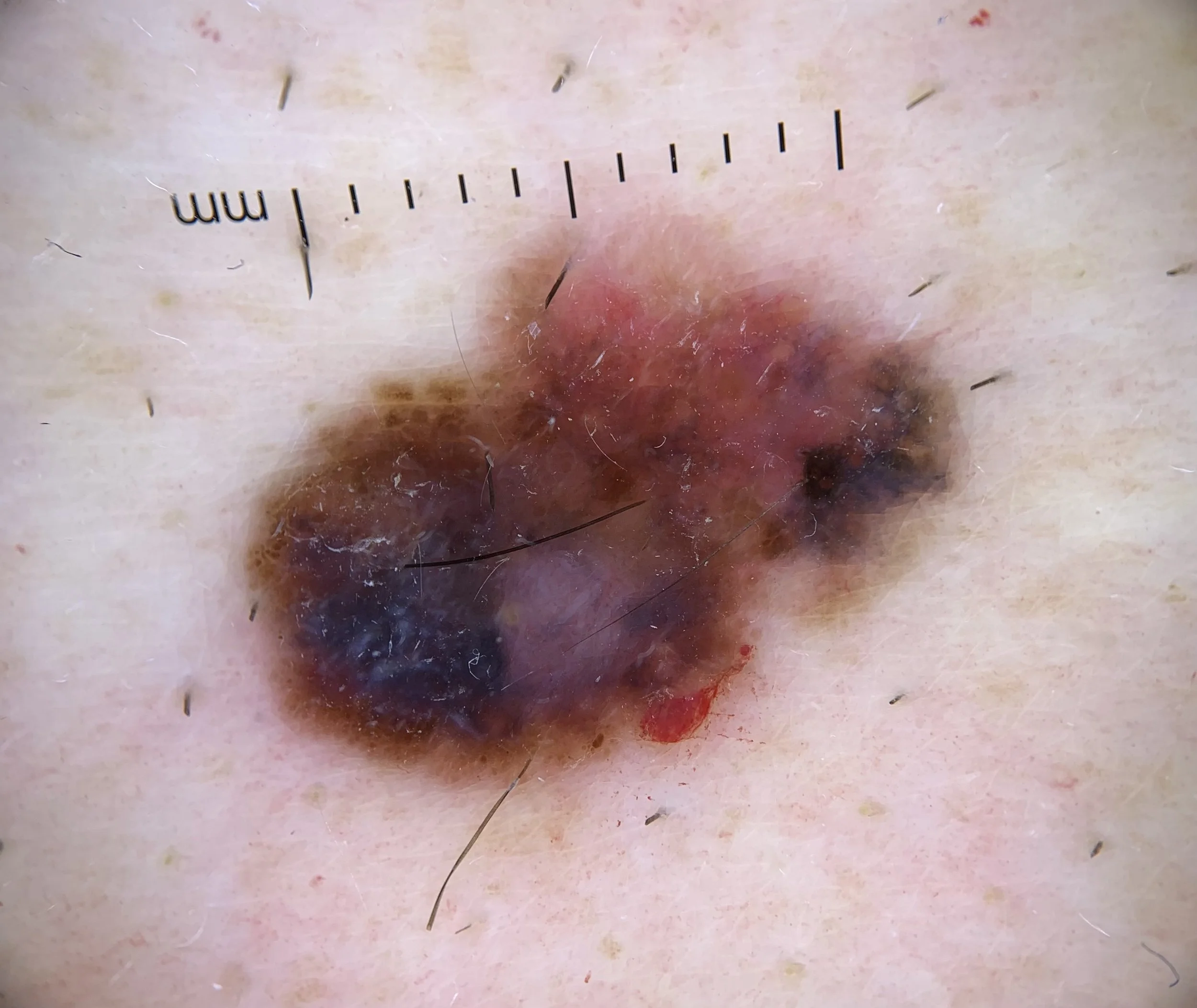
Changes to the skin that should prompt assessment include a new or changing skin lesion, a sore that does not heal, recurrent bleeding or crusting, a growing lump, or a mole that changes in size, shape or colour.
A mole or skin lesion that looks noticeably different from a person’s other moles, sometimes referred to as the “ugly duckling” sign, should also be assessed.
The ABCDE Rule for Moles
The ABCDE rule can help identify potentially suspicious or changing moles and pigmented skin lesions:
A – Asymmetry: One half differs from the other.
B – Border: Irregular, poorly defined or uneven edges.
C – Colour: Multiple or changing colours within a lesion.
D – Diameter: Larger lesions may warrant particular attention, although melanoma can also be small.
E – Evolving: Any change in size, shape, colour, elevation or symptoms.
The E for Evolving is particularly important. Any mole or skin lesion that is changing or appears unusual should be professionally assessed.
Precancerous Skin Lesions / Actinic Keratoses
Actinic keratoses are rough, scaly areas of skin caused by accumulated UV damage. They commonly develop on areas frequently exposed to the sun, including the face, scalp, ears and backs of the hands.
They are considered precancerous because a proportion can progress to squamous cell carcinoma (SCC). Treatment options may include cryotherapy, prescription creams or field treatments, depending on the number, location and extent of the lesions.
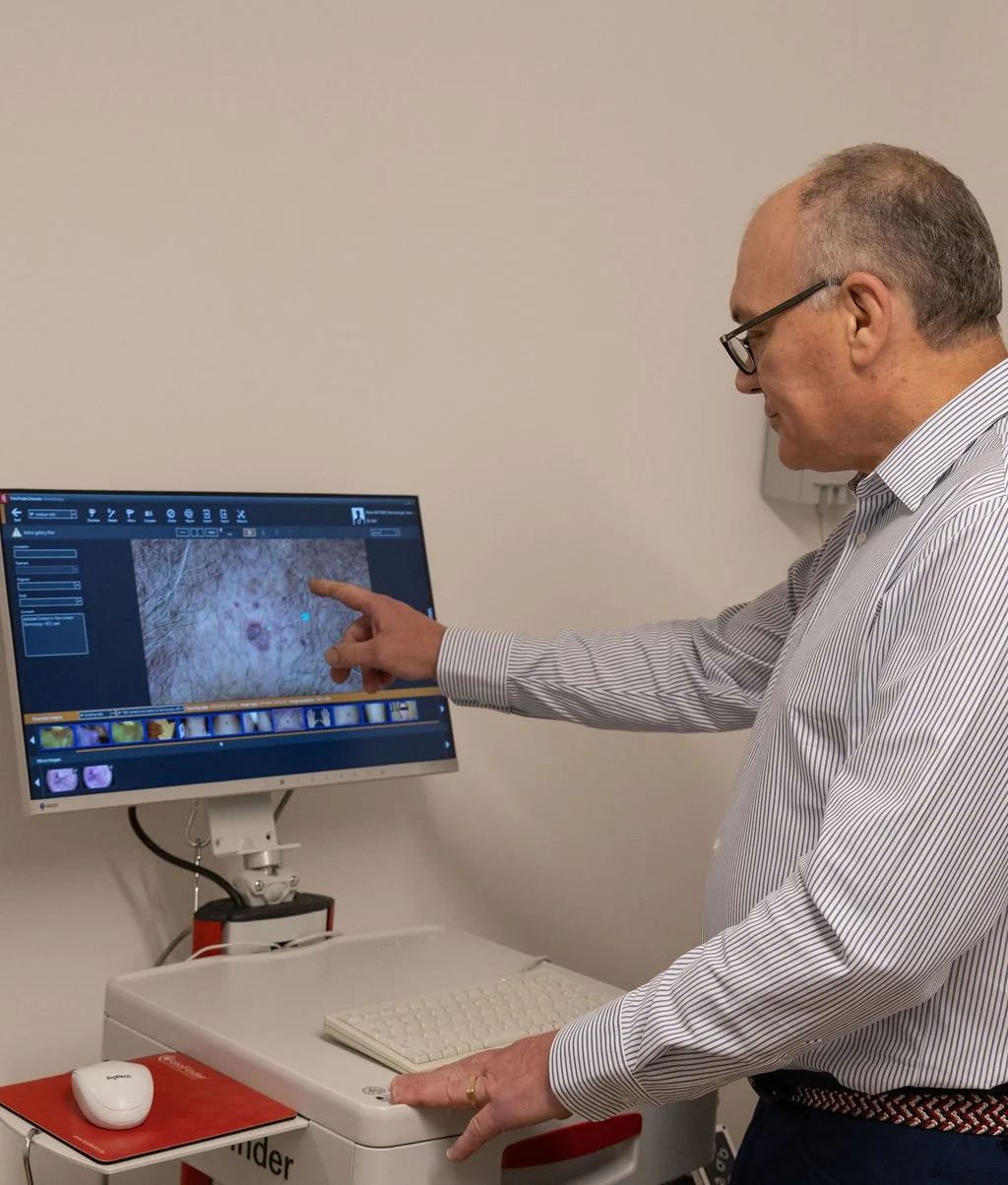
At Greystones Dermatology, we provide assessment of suspicious or changing moles and skin lesions, helping patients understand their diagnosis and the appropriate next steps.
Ready to get clarity and expert advice about your skin?
Book a consultation today for expert assessment, clear advice and personalised care.